This article draws from online sources. It will be progressively enriched as community voices are shared.
What You Will Learn
- ▸What the rigger's craft actually consists of — technique, anatomy, attunement, and aesthetic.
- ▸How to read a bunny through the rope: what their body is telling you and how to respond.
- ▸Scene design — how to structure a rope session from first wrap to last, and how to read when a tie is complete.
- ▸How riggers develop over time — what the practice of learning to tie seriously looks like.
What the Craft Actually Is
Rigging is a skill set that takes years to develop seriously, and the depth of the craft is one of the things that makes rope bondage distinct from most other kink practices.
The technical dimension is real: understanding anatomy — specifically which nerve pathways are vulnerable to compression and how the body's circulation responds to sustained restriction — is not optional for a rigger who wants to tie safely and well over a long practice. Understanding how different materials behave — the specific friction of jute versus hemp, how synthetic ropes handle differently under tension, what a rope's behavior tells you about its condition and age — is craft knowledge that takes time to accumulate.
But the technical dimension is the foundation, not the point. The rigger who is most technically proficient is not necessarily the best rigger. What the best riggers have, in addition to technical knowledge, is attunement: the ability to be continuously present with the person in their rope, reading their state through the rope's feedback and their body's signals, adjusting the tying to what this person needs right now rather than executing a pre-planned sequence.
The technique serves the attunement. The anatomy knowledge enables the safety. What the craft is actually for is the scene — the experience it produces in both people.
Rope and Materials
The rope matters. This is not gear enthusiasm for its own sake — the material you choose shapes the physical and sensory experience of the scene in ways that are significant.
Jute is the gold standard for most serious practitioners of Japanese-style bondage. It is relatively rough, has excellent friction properties (wraps hold without slipping), smells distinctive, and develops a particular quality over time as it is broken in through use. The roughness that makes it challenging on very sensitive skin is also what gives it its responsive quality — the bunny feels the jute more than a softer material, which contributes to the sensory richness of the scene.
Hemp is similar to jute but slightly softer and more forgiving. Good for longer sessions and for bunnies with skin sensitivity. Also natural fiber, also excellent friction.
Cotton and synthetic ropes are softer and more forgiving, better for beginners, easier to work with but producing a different sensory experience. They slip more easily under tension and have less of the distinctive smell and texture that, for many practitioners, is part of what makes rope feel like rope.
The rope's length, diameter, and preparation (conditioning with oils or heat treatment) all affect how it handles. A rigger who has been tying with the same ropes for years has ropes that are broken in specifically to their tying style — the ropes have become extensions of their practice.
Reading the Bunny
The most important skill a rigger develops is not tied to any specific technique. It is reading.
A bunny in rope cannot always tell you what is happening in their body, partly because the altered state of rope space makes verbal self-reporting unreliable, and partly because some physical issues — nerve compression beginning, circulation being affected — develop gradually below the threshold of conscious awareness. The rigger must read these things before the bunny reports them.
Breath is your most available signal. A bunny breathing slowly and deeply, with the rhythm of each breath moving visibly through the rope, is generally well. Breath that becomes shallow or held, or that quickens without obvious external cause, is information — something is changing. Check the tension of the adjacent tie, check for facial pallor, ask directly and simply.
Muscle tone through the rope. A body that is receiving the rope — that has settled into the tie, that yields to pressure — has a different quality under your hands than a body that is bracing or managing something. Settled muscle is soft, warm, receptive. Bracing muscle is different in a way that you can feel through the rope as clearly as through direct touch. The specific quality of resistance in a wrap that is affecting something tells you before the bunny can tell you.
Color and temperature in the extremities. Hands and feet that are changing color (reddening or going pale) or temperature are telling you about circulation. Check them regularly in any tie that includes the limbs.
The verbal channel remains important. Simple check-ins — not extended conversations but single-word or short confirmations — give you data and maintain the relational thread without breaking the scene's atmosphere. *Still good? Good.* The rhythm of this exchange, brief and consistent, is part of what the bunny experiences as being cared for by the rigger.
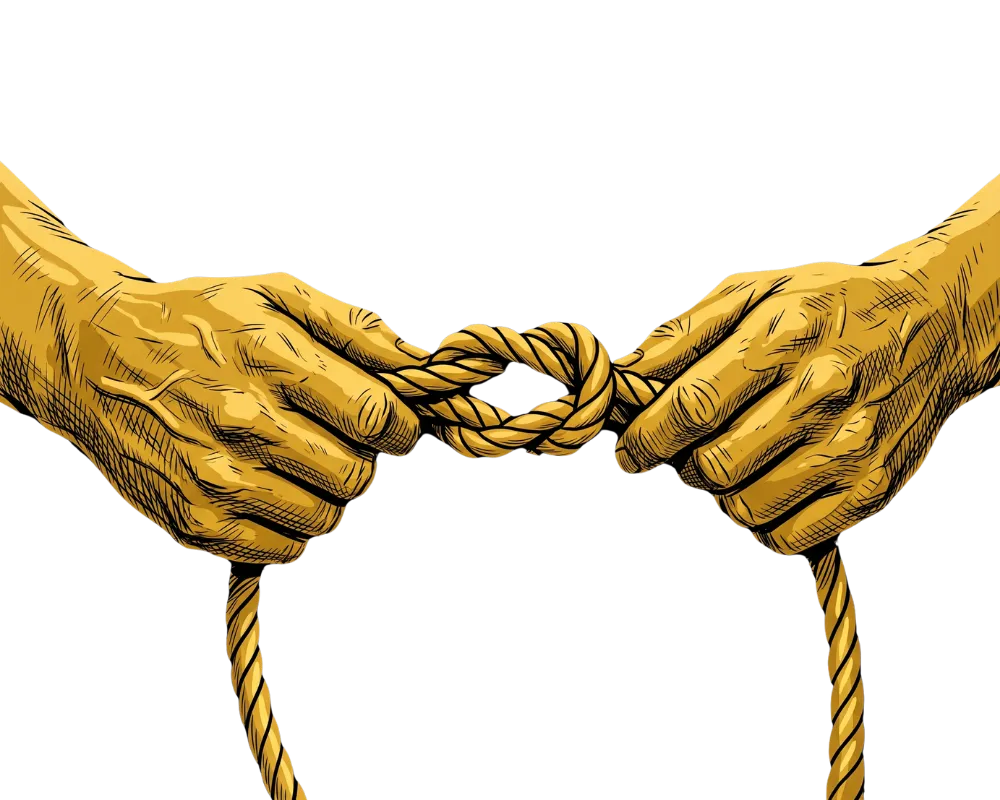
Scene Design — Building a Rope Scene
A well-designed rope scene has shape: a beginning, a development, a peak or a sustained middle, and an end. Understanding this shape — and having enough flexibility to adjust it in real time based on what is actually happening — is what separates a thoughtful rigger from one who simply executes ties.
The beginning establishes connection. The first rope on the body is the most important — the moment when the bunny's nervous system registers what is about to happen and begins its adjustment. The rigger's hands, the first wrap, the deliberateness of the initial contact: these set the tone of everything that follows. Take time here. Be present. The scene does not begin when you get to the interesting techniques — it begins with the first touch.
The development builds. Each successive tie adds to the physical reality of the bunny's immobilization and deepens the psychological effect. Pacing matters: too fast and the bunny's nervous system cannot settle into each stage before the next arrives. Too slow and the scene loses momentum. The rigger reads the bunny's state and adjusts their pace to what the body and breath are showing.
Knowing when to stop — when the tie is complete — is a skill that takes time to develop. The answer is not always when the planned sequence is finished. Sometimes the bunny is deep in space and the scene is complete well before the final planned tie. Sometimes a planned sequence needs to be shortened because the body is tiring or a position is becoming uncomfortable. Read the scene, not the plan.
The same moment — mid-tie
The Rigger
“The third pass of the chest harness is settling. I can feel the difference in her breath — it deepened two wraps ago and has stayed there. She has found it. I have three more passes planned but I'm reading the tension in her shoulders and I think two will be enough tonight. I'll close it there and let this settle before I add anything else.”
The Bunny
“The rope is everywhere now and it is all I can feel. Each breath moves it. The weight is more than I expected and less than I was afraid of. There is a hand somewhere near my shoulder, adjusting something, and I do not know if the adjustment is about the rope or about me. It doesn't matter. I am in here. The world outside is very far away.”
The Long Practice
Becoming a good rigger takes time and it cannot be shortcut. The technical knowledge accumulates through study, through taking workshops with skilled riggers, through practice — repetition of ties on patient partners until the hands know them without conscious direction. The attunement develops through tying many different people, reading many different bodies, being wrong and learning what wrong feels like in the rope before anything becomes a problem.
Serious riggers in the global community tend to share a few characteristics: they study continuously, they seek out teachers and peers who are more skilled than they are, they are honest about the limits of what they know, and they treat the craft with the respect it deserves given what they are holding in their hands while they practice it.
The rope community in most cities with an active kink scene offers structured learning: rope jams (informal practice sessions where riggers tie and learn together), workshops given by visiting teachers, mentorship relationships between experienced and developing riggers. These structures exist because the community understands that rigging is not self-teachable to the standard it deserves — that learning from people who know more than you, in person, is the only path to the craft.
What experienced riggers often say about reaching a certain level: the technique has become fluent enough that it is no longer what they are thinking about when they tie. What they are thinking about — what they are entirely present with — is the person in their hands. Getting to that point is what the years of practice are for.
Rigging is a technical skill set built on anatomy, material knowledge, and continuous practice — but the technique serves the attunement, not the other way around.
Material matters: jute and hemp produce a different sensory and practical experience from synthetic ropes, and the right choice depends on the scene and the bunny.
Read the bunny through breath, muscle tone, and circulation — all three tell you things before the bunny can tell you themselves.
Scene design has a shape: a beginning that establishes connection, a development that builds, and an end the rigger reads rather than plans.
Becoming a good rigger takes years and cannot be shortcut — seek teachers, practice deliberately, and stay honest about the limits of what you know.
What Has Tying Taught You?
About bodies, about presence, about what the craft requires of you — and what it gives back.
Contribute