This article draws from online sources. It will be progressively enriched as community voices are shared.
What You Will Understand
- ▸Why the gear is not optional — and why that is not a practical statement but a structural one.
- ▸What each material actually feels like from the inside, not just on paper.
- ▸The ritual of suiting up and why it is already part of the scene before anything else happens.
- ▸How to build a kit — in the right order, with the right priorities — from both the gimp's and the Dom's perspective.
The First Time
The first time a latex hood closes over your face, something happens that is difficult to anticipate and impossible to fully prepare for.
The smell arrives first — that specific latex scent, clean and chemical, hitting the inside of the hood before anything else changes. Then the compression, even and total, across the skull. Then, if the hood is blind, the darkness. Not the darkness of a room with the lights off. The darkness of a surface sealed against your eyes. The world outside continues. You simply cannot access it.
Most people report two things simultaneously in that moment: a spike of something close to alarm, and something else — a recognition, a settling, a specific interior sensation that is hard to name but easy to remember. The alarm passes in seconds. The other thing does not.
This is why people keep coming back. Not for what they expected. For what they found instead.
The Ritual of Suiting Up
Putting on a rubber suit is not preparation for a scene. It is the beginning of one.
Dressing in latex requires time, attention, and another set of hands if the fit is serious. Talc or dressing aid on the skin first. Then the suit goes on slowly — pulled up the legs, worked over the hips, the arms fed in carefully, the collar smoothed down. The material is tight everywhere and the body disappears under it section by section. By the time the hood goes on, the transformation is already well underway.
For the person being suited, each section of body that goes under rubber is separated from the air, from direct touch, from visibility. You become progressively less accessible. By the time the last piece is on, the person who started the process is already someone else.
For the Dom, the suiting process is a chance to establish exactly what is being built. Deliberate, unhurried, attentive. The way you handle the gear — whether you rush or take your time, whether you adjust until it is exactly right or stop when it is merely done — communicates everything about what this scene is.
The Suit: What Each Material Actually Does
The choice of material is not an aesthetic preference. Each one produces a substantially different experience — different heat, different weight, different relationship to the body inside.
| Latex | Industrial Rubber | Neoprene | |
|---|---|---|---|
| Sensation against skin | Second-skin compression — you feel it everywhere simultaneously, like being held | Heavier, more present. You feel the weight of the material on you. | Softer, more forgiving. Less intense compression, slight cushioning. |
| Heat | Extreme and fast. Temperature climbs within minutes and keeps climbing. | High, but slower to build. Sustains a deep, saturating heat. | Moderate. Breathes slightly more. Good for longer sessions. |
| Smell | Strong, distinctive, conditioning. The most powerful olfactory trigger in rubber kink. | Deeper and more industrial than latex. Some find it more intense. | Mild. Subtle chemical note. Less olfactory presence. |
| Weight |
Most people begin with latex. It is the most available, the lightest, the most visually iconic. But the people who stay in this world seriously tend to move toward rubber — specifically toward heavier industrial materials — as they understand more precisely what they are after. The weight changes the experience. The smell changes the conditioning. The durability matters particularly for service use: industrial rubber that does not fear tearing is the practical choice for a gimp who is being put to work.
The makers who work with industrial rubber seriously — primarily in Germany, the UK, and Canada — are not producing fashion pieces. Vilain Garçon's work in Montreal uses the same heavy-gauge rubber found in industrial manufacturing. The difference from fashion-grade latex is felt immediately in your hands before anything else: the weight, the density, the way it holds its shape. Built to last years of serious use, not seasons of occasional wear.
On gear quality as a signal: if a gimp is an object, and that object appears substandard — cheap, ill-fitting, visibly poor quality — it diminishes the desire to use it. The gear is an expression of the role. Investing in it is not vanity. It is part of what makes the transformation credible.
The Hood
The hood is where the transformation actually happens. A suit without a hood is a rubber body. A suit with a hood is a gimp. The face is the last surface of the self — cover it and something fundamental changes, both for the person inside and for everyone looking.
Hood selection shapes everything about the scene that follows. Not just how much the gimp can perceive, but what kind of headspace becomes possible, how fast the descent happens, and what quality of presence emerges on the other side.
Hood Types — The Experience of Each
**Open-face hood.** The head is enclosed but the face is exposed. Hair, neck, and head contour disappear but expression and communication remain. Good for first experiences and for longer scenes where verbal communication is needed. **Closed-face hood.** Everything covered except specific apertures for breath. The face is gone. The person becomes a shape. Core gimp hood — produces the fundamental change in how the body reads in a room. The descent into headspace is noticeably faster. **Blind hood.** Eyes sealed. No visual input. The brain gives up its attempts at environmental mapping much faster without vision. One of the most effective hoods for reaching deep gimp space. From the sub's perspective: the no-vision hood plus the disabling of the hands is the minimum essential configuration. **Gas mask.** Not just a hood — a different kind of scene. Breathing becomes audible, mechanical, present. Every breath is an event. Many people find the gas mask the fastest doorway into gimp space — it makes the breath impossible to ignore and leaves the social self with nowhere to operate. **Total deprivation hood.** Sealed, padded, sometimes with integrated ear covers. Maximum reduction. Fast descent, intense state. Demands the most from the Dom in terms of sustained attention.
Gas Masks
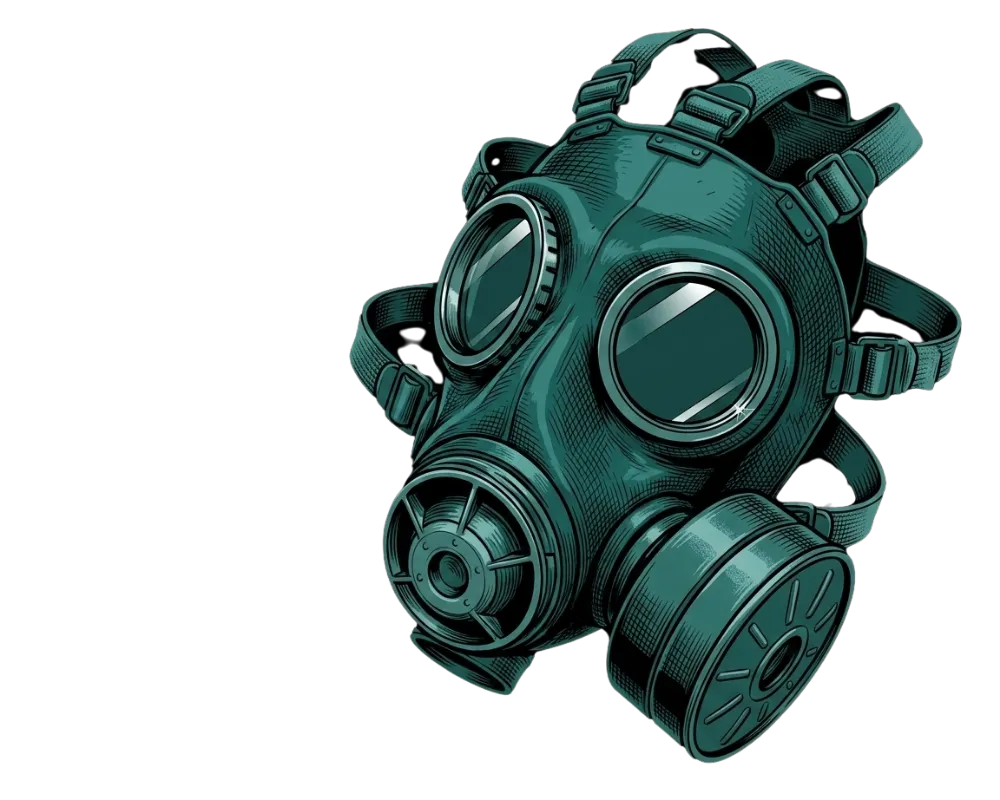
A gas mask changes breathing. Not restricts it — changes it. The resistance is slight but present, just enough to make each breath a deliberate act. The sound is amplified and close. The smell of rubber and filtered air fills every inhale. The visual world is transformed by the lenses into something slightly wrong — curved, distorted, industrial.
The breath is the one automatic process that normally runs below consciousness. When the mask makes it impossible to ignore, the mind has nowhere else to go. The social self cannot maintain its operations when every unit of conscious bandwidth is occupied by inhale-exhale-inhale.
There is a community within the gimp and rubber world organized specifically around gas mask practice — vintage military surplus pieces, modern fetish-specific models, medical-grade respirators. Each has a different resistance, a different smell, a different aesthetic. The people who are serious about this tend to have strong opinions about their equipment.
Locking and Restraints
All gimp gear should be lockable. This is not primarily a security consideration — it is a psychological one. A collar that is locked communicates something different from a collar that is clipped. A chastity device that is locked communicates something different from one that is not. The lock itself is part of the headspace trigger: the transfer of control over the body's own access points is explicit, physical, and irreversible for the duration of the scene.
From the Dom's perspective, the essential locked elements are: collar (locked, ideally), chastity device, and any restraint system applied. An electric shock device on collar, balls, or ass is a highly valued optional addition — it extends the Dom's reach into the gimp's sensory experience without requiring physical proximity.
Restraints add the final layer by removing voluntary movement. A straitjacket folds the arms in involuntary self-containment. An armbinder pulls them back, presenting the body openly. A bondage bag removes the legs — the gimp becomes a sealed, still form. Each posture produces a different quality. This is a scene design decision, not an equipment decision.
Building a Kit
The most common mistake is trying to assemble everything at once. The result is a collection of pieces bought in the wrong order, fitting imprecisely, that together do not produce the experience they were supposed to. This is also an expensive mistake.
The right order:
Buy the hood first. It is the most psychologically significant piece. A well-made blind or closed hood in serious material will produce more of what you are looking for than any other single purchase.
Add the suit when you know your material. Do not buy a full catsuit before you have worn the material long enough to understand whether it is right for you. Borrow if you can. Try a top or leggings first.
Restraints come after the sensory environment is established. Once you know what the suit and hood produce, you will know what kind of immobility you want to add.
The gas mask is its own branch — not better or worse than the blind hood path, just different. Decide whether that direction interests you before investing in it.
For Dom-side essential gear: beyond the suit and hood, a locked collar is the first addition. A chastity device follows. An electric shock device is highly valued by Doms who want to maintain reach over the gimp's sensory experience during storage or distance play.
The Relationship to the Gear
People who stay in this world develop a relationship to their gear that goes beyond the practical. The pieces accumulate slowly, each one chosen with care, each one worn in and conditioned over time. The smell of a hood that has been used for years is different from a new one — deeper, more specific, more loaded with association.
The objects carry the history of what has happened in them. A suit worn through a hundred scenes has a different quality — in how it moves, how it smells, what it triggers neurologically when you pick it up — than one fresh from the maker. The conditioning is real and it builds over time.
Serious practitioners treat their gear accordingly. Careful storage. Proper cleaning. Repair rather than replacement. The care is not fussiness — it is an understanding that the gear is doing something precise and that maintaining it well keeps it doing that thing.
Suiting up is already the beginning of the scene — the transformation starts before the hood goes on.
Each material produces a fundamentally different experience. Know what you are choosing and why.
The hood is the most important single piece. Buy it first. A no-vision hood plus hand disabling is the minimum essential configuration from the gimp's perspective.
All gimp gear should be lockable — the lock itself is a psychological tool, not just security.
Gear conditions over time. The relationship to serious pieces is long-term, and that is part of what makes them work.
What Is Your Most Important Piece of Gear?
Every serious practitioner has one piece they would not do without. What is yours — and what makes it irreplaceable?
Contribute