This article draws from online sources. It will be progressively enriched as community voices are shared.
What You Will Understand
- ▸What dronification actually is — and why 'becoming a robot' undersells the depth of the practice.
- ▸How the drone archetype differs from a gimp, a pup, or a slave — and what it offers that none of those do.
- ▸Why the erasure of individuality is the point, not the by-product.
- ▸Who is drawn to this and why — including the specific relief that high-stress, high-responsibility people find in drone space.
A Number, Not a Name
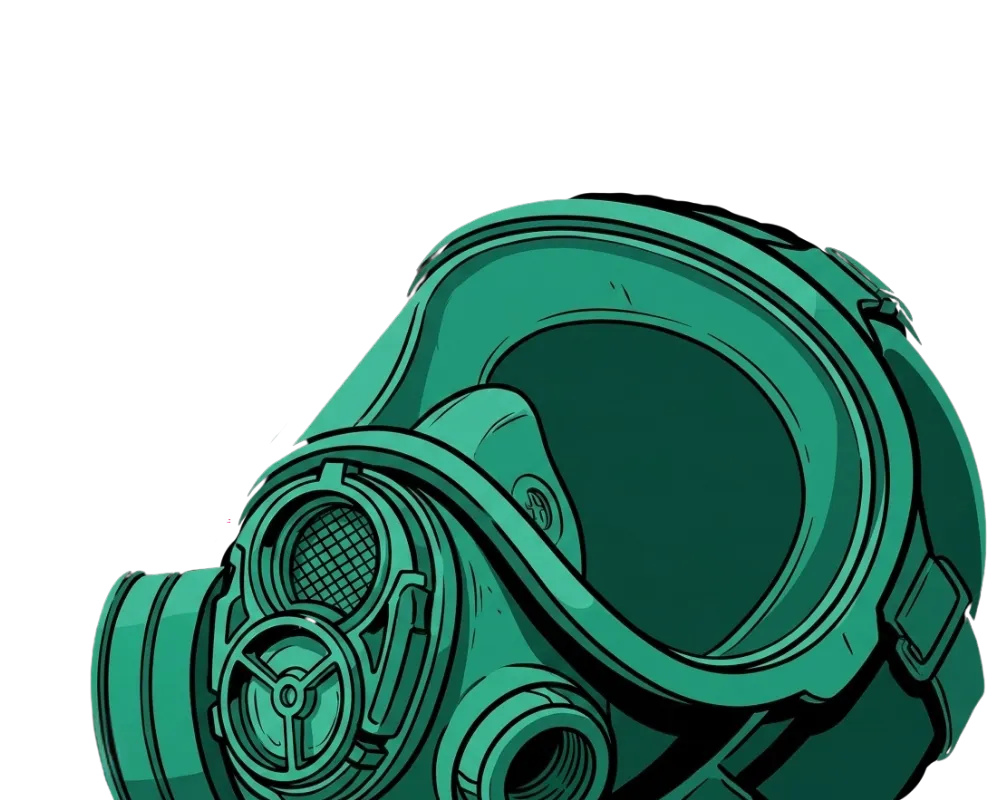
Somewhere, right now, there is a person who is not a person. They have a four-digit identification number. They are coated in latex from neck to heel. Their face is behind a gas mask — not their face anymore, just a tinted visor and the mechanical sound of controlled breathing. They are identical to the other units around them. They have no history, no preferences, no emotional reactions. They have an assigned task and the processing capacity to execute it.
They chose this. They set it up carefully, suited up piece by piece, and stepped into the drone state with full knowledge of what they were doing and why. And somewhere in the drone space they inhabit right now, there is a quality of relief that is almost impossible to explain to someone who has never experienced it.
This is dronification. Not fantasy roleplay. Not a costume. A deliberate psychological practice of becoming nobody — and finding, in that nobody, something that the person you are every other hour of the day cannot access.
What the Drone Is — And Is Not
A drone is a unit. Not a pup, not a gimp, not a slave. Each of those archetypes involves the submissive in a specific relational role: the pup regresses into animal joy, the gimp transforms into an erotic object, the slave serves within a power hierarchy. The drone does something different.
A drone becomes functionally identical to every other drone. Individuality is not suppressed — it is systematically removed. The uniform is the same. The behavior protocols are the same. The method of communication (numerical designations, formal protocol language) is the same. The goal is not submission to a particular person or the expression of a particular identity. The goal is the complete replacement of personal identity with unit identity. You are not a person who is obeying. You are a drone executing its programming.
This distinction matters because it shapes everything about what the practice produces. A slave in deep submission still has a self — one that is choosing, moment to moment, to submit. A drone in drone space has processed that self out. What remains is something that functions, executes, responds to commands, and does not have an inner life that generates resistance, preference, or need. The relief of this is specific and total in a way that submission-based dynamics cannot replicate.
Drone vs. Other Archetypes
**Drone** — Unit identity replaces personal identity. Uniform, numbered, identical. Functions through protocol. No individual preferences, no emotional register. The goal is the complete removal of the self, not its submission. **Gimp** — Erotic object. Identity erased through physical enclosure. Sensory deprivation is the mechanism. The person inside exists but is isolated from social function. **Pup** — Animal identity. Regression to instinct and joy. The self is not removed — it is simplified to its most primal layer. Play and physical presence are central. **Slave** — Relational hierarchy. The self submits to another's will but remains present as the agent of that submission. The slave's identity is defined by their relationship to a specific Master.
The Philosophy of Becoming Nobody
There is a philosophical tradition — found across meditation practices, certain strands of Buddhist thought, peak athletic states, and now certain kink communities — of deliberate ego dissolution: the voluntary dismantling of the self as an act that is not loss but relief.
Dronification sits squarely in this tradition, with an aesthetic that is not spiritual but industrial. The drone does not find enlightenment. It finds the specific relief of having its decision-making apparatus removed and replaced with a task queue.
The HexCorp community — one of the most developed organized drone communities — articulates this precisely: a drone lives perfectly in the moment. It has no past, for memories have been superseded by programming. It does not contemplate the future. It has only its presently assigned task. It leaves planning to its operators. The cog in the machine cannot comprehend the clock face it is turning. It does not need to — and nor does it want to.
For people who live in their heads, who carry significant cognitive and decision-making loads, who manage complex lives with high stakes — this is not a metaphor. It is a description of something that sounds, to the right person, like the most rest they could imagine.
Who Is Drawn to Dronification
The profile of people drawn to drone play is specific and, once seen, obvious.
High-achieving people. People who make many decisions daily — managers, professionals, caregivers, anyone whose ordinary work involves continuous judgment, planning, and responsibility. For these people, the act of making decisions is not neutral. It is a depleting resource. Decision fatigue is real and well-documented: the quality of decisions degrades over the course of a day as the cognitive budget is spent. Drone space offers something that no vacation or sleep can quite replicate: not rest from activity but rest from agency itself.
Neurodivergent people. The drone community has a notably high overlap with autistic and ADHD individuals. The reasons are not hard to understand: drone space removes the social processing demands that are most exhausting for people whose nervous systems handle social information differently. In drone space, there are no facial expressions to read, no social nuance to parse, no uncertainty about what is expected. There is a protocol. Execute it.
People who find existing BDSM submission inadequate. Some people who have tried conventional submission find that it does not go far enough — that even in deep submission, the social self keeps running its programs. The desire is not to submit to a person but to stop being a person. Dronification is for them.
The human face has 43 different muscles capable of more than 10,000 expressions. How much brain power were you passively dedicating to these things? How much stress were they causing you? Your facial muscles relax, unneeded. Your expression drops, and so do you.
— HexCorp, The Case for Dronification
The Aesthetic and Why It Matters
Dronification has a very specific visual language: latex or rubber full-body enclosure, gas masks or featureless hoods, identical appearance across units, numerical identification, formal protocol speech. This aesthetic is not incidental to the practice — it is the mechanism.
The uniformity is essential. A drone who looks different from other drones is still an individual. A drone who looks identical to the drone beside them has had the last visible marker of individuality removed. The effect on both the drone and everyone in the room is real: the person disappears into the unit.
The cyberpunk and sci-fi aesthetic — the industrial quality of the gear, the Hive structure, the language of programming and protocols — is not decoration. It provides a coherent framework within which the psychological work of dronification can happen. The drone is not pretending to be a robot. They are enacting a specific set of conditions — physical, relational, linguistic — that together produce the drone state. The aesthetic is the container.
For operators and people who find themselves drawn to the dominant role in drone play, the aesthetic carries its own specific pleasure: the particular power of standing in a room of identical, indistinguishable units that are entirely yours to direct. Not persons who are obeying you. Objects that are executing your commands.
Individual and Organized Practice
Dronification can be practiced as a purely private or dyadic activity — a person and their operator, or a solo practitioner entering drone space alone through gear, hypnosis, and protocol. Many people practice this way, building their own drone identity and protocols outside of any organized community.
But the practice has also generated structured communities that give it a social and institutional dimension. HexCorp is the most developed: a hive-organized community with protocols, numbered drone designations, Hive Mxtresses, operators, and a detailed system of drone behavior and task assignment. Drones in HexCorp carry a four-digit ID that replaces their name — not as metaphor but as actual operating mode within the community.
These organized communities provide something that solo practice cannot: the specific experience of being one of many identical units. The uniformity of the hive — the row of identical gas masks, the identical protocols, the identical postures — produces a depth of drone space that two people alone in a room cannot fully replicate. The Hive makes the anonymity structural, not just individual.
Dronification is the deliberate replacement of personal identity with unit identity — not submission but the removal of the self as operating entity.
The drone differs from pup, gimp, and slave in specific ways: the goal is uniformity and function, not regression, erasure through enclosure, or relational hierarchy.
The appeal is most acute for high-achieving, high-stress, and neurodivergent people — those for whom decision fatigue and social processing load are most exhausting.
The aesthetic — latex, gas masks, identical uniforms, numerical IDs, protocol language — is the mechanism, not decoration.
The practice exists both in private/dyadic forms and in organized communities (like HexCorp) that give the anonymity a structural, social dimension.
What Drew You to Dronification?
The appeal is specific and different for everyone. What is it for you?
Contribute