This article draws from online sources. It will be progressively enriched as community voices are shared.
What You Will Understand
- ▸How the keyholder role is fundamentally about managing another person's desire, not just about power-taking
- ▸What the submissive role actually requires: vulnerability, trust, and a specific kind of surrender
- ▸Why the dynamic is reciprocal—what each role gets and what each role gives up
- ▸How communication, timing, and presence become the core erotic technology of the dynamic
The Weight of the Key
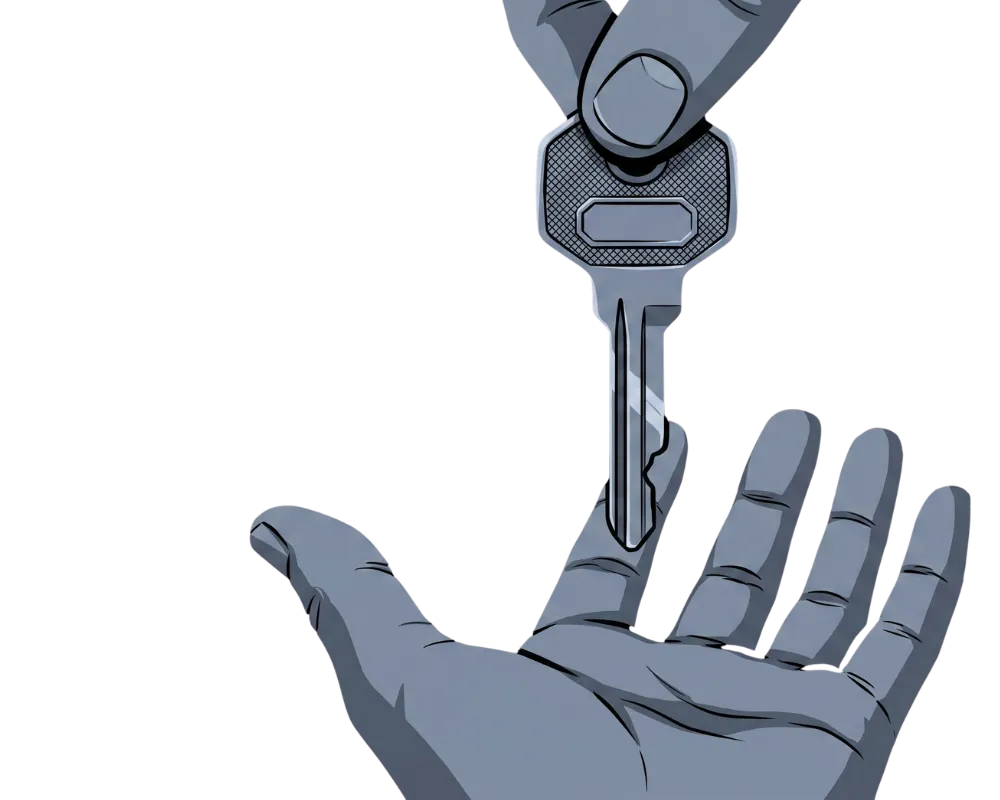
Having the key means you are responsible for another person's sexual response. This isn't a light thing, even though it might look light from the outside—even though it might feel light in the moment when you're deciding to tease him, or to make him wait longer, or to finally let him come after weeks of denial.
The keyholder holds control over something fundamental. Not in some abstract power-play sense. In a literal, daily, physiological sense. Every time the locked person becomes aroused, their body encounters a limit. That limit doesn't exist because of physical circumstance. It exists because you decided it should.
This creates a specific responsibility. You are controlling someone's access to sexual release. If you do this carelessly, if you forget about it, if you treat it as a game without understanding what you're actually doing to another person's neurochemistry and emotional state, the dynamic collapses. Or worse—it becomes something that feels damaging instead of erotic.
What the Keyholder Actually Does
The keyholder's role breaks down into several distinct functions, and each one requires its own kind of attention.
First, the keyholder is a gatekeeper. You decide when release is possible and when it isn't. You might set a schedule. You might decide based on his behavior. You might decide based on your own mood or desires. But the decision—the authority to decide—rests with you.
Second, the keyholder is a tease. If you wanted to, you could just never let him out. But the dynamic is built on the tension between denial and the possibility of release. This tension is where the eroticism lives. Your role is to manage that tension: to remind him that release is possible, that it exists, that he might get it, and then to deny it, to extend the waiting, to promise future release while withholding present relief.
Third, the keyholder is a witness. You are watching him live in a state of constant arousal and denied satisfaction. You are seeing what that does to him. You are aware of how he moves, what he looks at, what he says, how his behavior changes. This witnessing is intimate. You are seeing him at a level of vulnerability he doesn't usually show.
Fourth, the keyholder is a presence. The submissive knows you have the key. He knows you control his access to pleasure. The simple fact of your existence, your attention, your proximity becomes erotic for him. You don't have to do anything. Your power operates at a distance. This requires you to understand what your mere presence means to him.
The moment of release—what happens when you finally decide to let him out
The Keyholder
“You open the lock. You watch the device come off. There's this moment where the denied sensation suddenly stops, and his body wakes up to possibility again. The look on his face when he realizes he's about to come—that he finally can—that's a specific kind of power. Not the power to dominate. The power to grant. You've been withholding something essential, and now you're giving it back. You are the source of his relief and his pleasure.”
The Locked
“The lock opens. There's the physical sensation of release, suddenly. Your body is free in a way it hasn't been. For a moment you just exist with the possibility. And then you're aware that he's watching, that you're about to come for him, that your pleasure exists because he allowed it. The orgasm itself is often more intense than usual—the denial has built so much anticipation that the release hits harder. But beyond the physical sensation is the emotional reality: he made this happen. He withheld it. He is now allowing it. Your pleasure is his gift.”
What the Locked Person Actually Gives Up
The locked person is surrendering autonomy over their own body. This is the core of the dynamic, and it's significant. It sounds simple—you can't touch yourself, you can't come—but what it means in practice goes deeper.
When you're locked, your sexuality is no longer self-directed. You can't initiate your own relief. You can't respond to your own desires the way you normally would. When you feel arousal building, you can't bring it to conclusion. The natural arc of desire—building toward satisfaction—is cut off. This creates a specific kind of frustration. Not the frustration of deprivation, but the frustration of incompleteness. Your body wants to finish something, and it can't.
This frustration is erotic, which is why men choose it. But it's also real. Over time, some men find that they stop trying to fulfill themselves and start existing in a state of constant minor arousal. This becomes normal. The frustrated state becomes their baseline.
Beyond the physical, the locked person is also surrendering knowledge and control. They don't know when they'll be released. They can't choose when. They have to live with uncertainty, with waiting, with the knowledge that their pleasure is not theirs to claim. This vulnerability—this not-knowing, this dependence on another person's decision—is what creates the psychological intensity of the dynamic.
Trust as Infrastructure
Chastity dynamics can only work if trust is substantial and real. This isn't the kind of trust that you can fake. The locked person has literally put the physical and psychological well-being of their sexuality in another person's hands. If that person breaks the trust—if they abandon the dynamic, if they lose interest, if they betray the locked person's vulnerability—the fallout is significant.
This is why communication is central to the dynamic. You need to check in. You need to understand what the locked person is experiencing. You need to know if the frustration is still erotic or if it's starting to feel harmful. You need to be present enough to notice changes in his behavior, shifts in his mood, signs that something is becoming unhealthy rather than erotically intense.
The keyholder has a responsibility to maintain the dynamic's integrity. Not to abandon it, not to take it for granted, not to treat it as incidental. The locked person has given something up. The keyholder has agreed to hold it. That's a contract, even if it's not written down.
The Reciprocal Nature of Power
It's tempting to think of the chastity dynamic as simply the keyholder having power and the locked person being powerless. But this isn't accurate. The dynamic is reciprocal, even though the form of power is different.
The locked person has voluntarily surrendered their power. They chose to put on the device. They continue to choose to stay locked. They can always ask for release. This means the keyholder's power exists in a context of consent. The locked person, by staying, is actively choosing to keep that power structure in place.
Additionally, the locked person has power through their own vulnerability. Their neediness, their frustration, their constant low-level arousal—these things matter to the keyholder. A good keyholder is motivated by this need. They want to control the locked person specifically because the locked person has given themselves to be controlled. The vulnerability is a form of power.
And on a practical level, the locked person controls the dynamic through their responses. If the keyholder's teasing works, if it's creating the right kind of intensity, the locked person's arousal shows it. If the denial is becoming unhealthy, the locked person's behavior will signal it. The keyholder is responsive to these signals because they need to be. They're reading another person's sexuality in real time.
The Presence of the Other
The erotic magic of the chastity dynamic comes largely from the fact that the other person is present. It's not just about the device—it's about the fact that someone else holds the key. Someone else controls your access to pleasure. Someone else is aware that you're denied.
This awareness creates a specific kind of eroticism. In normal sexuality, desire is something you can keep private. You can fantasize without anyone knowing. You can be aroused in public and no one needs to know. But in chastity, if you're locked, your vulnerability is physical. It's visible in how you move, in how you respond to stimuli, in the fact that something is obviously keeping you constrained. There's a public dimension to the private experience.
The keyholder, by having that key, is constantly present in the locked person's sexuality—even when they're not in the same room. The locked person is aware of the keyholder's control throughout the day, throughout the night. Every moment of arousal is ultimately directed toward the keyholder, toward the hope of their decision to release, toward the awareness of their power.
The keyholder's role involves gatekeeper, tease, witness, and presence—each requiring distinct kinds of attention and understanding
The locked person voluntarily surrenders autonomy in ways that are deeply erotic precisely because they're truly vulnerable
Trust is not incidental to the dynamic; it is the infrastructure that makes everything else possible
Power in the dynamic is reciprocal, not unilateral—the locked person's consent and vulnerability are their own form of power
The other person's presence and awareness transforms sexuality from a private experience into a relational one
What drew you to your role?
Whether you hold the key or you wear the lock, what about that specific position in the dynamic is most compelling to you? What does your role give you that nothing else does?
Contribute